Executive order aims to streamline environmental permitting process
Recommendation from Minnesota Chamber Foundation report gained bipartisan support and drove action at the Capitol
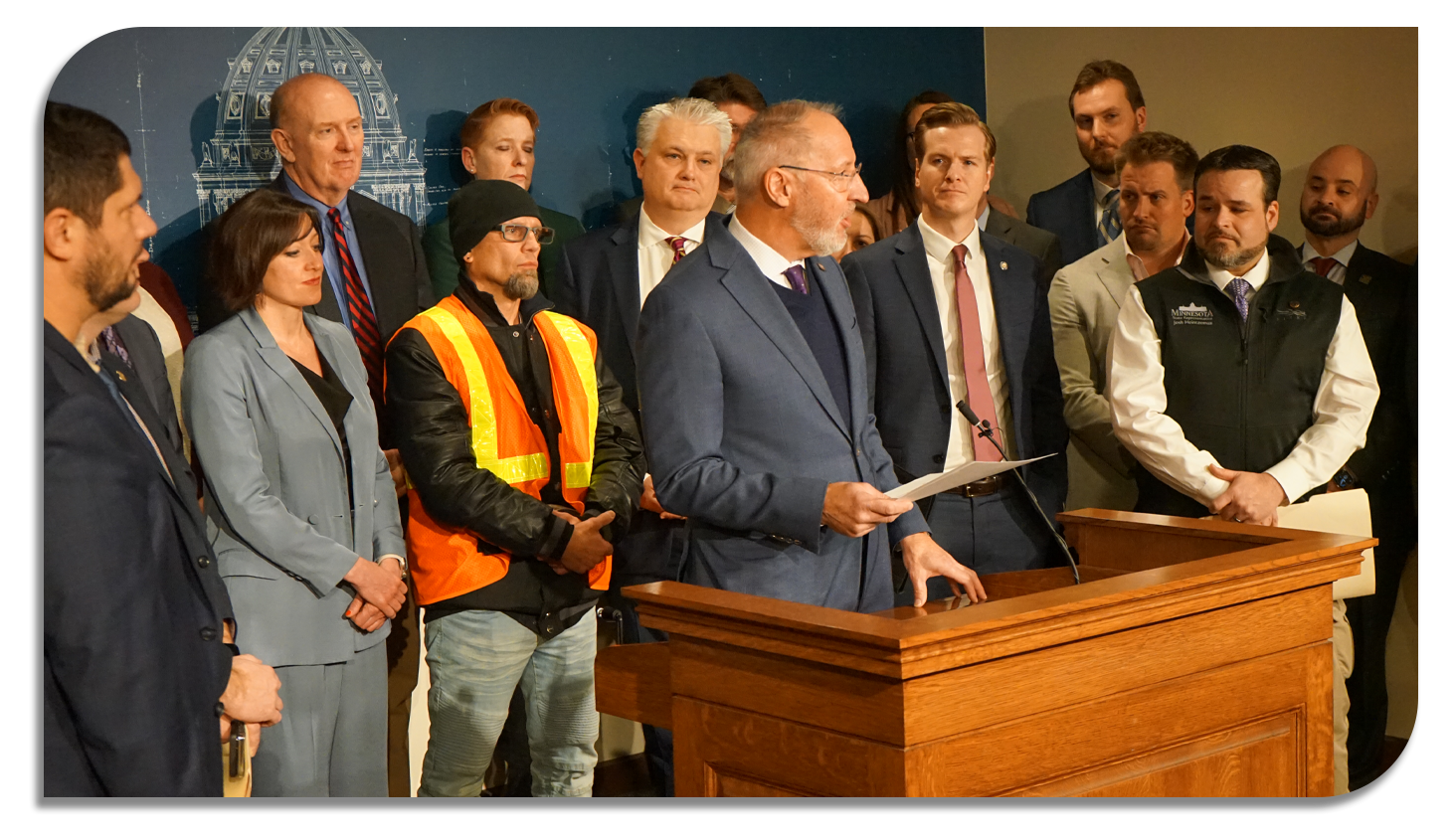
On February 13, 2026, Governor Tim Walz signed an executive order directing state agencies to improve the efficiency and transparency of Minnesota’s environmental permitting system. The move builds on recommendations from a 2024 report by the Minnesota Chamber Foundation and passage of the bipartisan 2025 permitting reform legislation, which addresses delays that have affected major projects across the state.
The order aims to reduce uncertainty for businesses seeking permits while maintaining Minnesota’s environmental protections. It reflects a broader effort to modernize regulatory processes as companies weigh where to invest, expand and create jobs in a competitive national landscape.
Data from the Foundation’s report found Minnesota’s permitting timelines often lag behind peer states. From 2018 to 2023, priority Tier 2 air permits — typically required before construction can begin — took an average of 586 days to issue. Comparable water permits averaged 476 days, and some projects exceeded 1,000 days. Only a small share met the state’s 150-day goal, while hundreds of applications remained unassigned to agency staff for extended periods. Permitting in Minnesota takes too long, costs too much, and is too uncertain for investment.
The executive order focuses on increasing flexibility in air permitting. Many states allow limited site preparation under a separate construction authorization before full operational approval.
This two-staged approach maintains environmental protections since full permit approvals are still required before a facility begins operations. This streamlined process reduces delays, lowers financial risk for large capital projects and provides more predictability for both businesses and regulators.
The Minnesota Chamber of Commerce has been the leading voice for reforming this regulatory system.
“We appreciate the governor signing this executive order to advance environmental permitting reform, building on the Minnesota Chamber Foundation’s 2024 permitting report and bipartisan work during the 2024 legislative session,” said Doug Loon, president and CEO of the Minnesota Chamber of Commerce. “By improving timelines and accountability while maintaining strong environmental standards, this action helps move Minnesota forward and strengthens our ability to compete, grow and create jobs.”
The Foundation’s report drew attention from policymakers and stakeholders after its release in early 2024. It relied on agency data, comparisons with other states and input from regulators, engineers and permit applicants to identify solutions aimed at improving efficiency without weakening environmental safeguards.
Following the report, the Chamber convened a coalition of business organizations, trade groups and employers to build support for reforms. The coalition met with state agencies, lawmakers from both parties and environmental stakeholders, shaping legislation debated during the 2024 and 2025 sessions. Proposals included improving application reviews, increasing support for applicants, enhancing transparency and expanding expedited permitting.
Under the order, the agency is directed to explore ways to allow limited early construction before full operational permits are issued. It also reinforces expectations for improved timelines, accountability and coordination across agencies involved in environmental review.
Advocates say the changes could reduce risk tied to long permitting timelines, particularly for large projects in advanced manufacturing, clean energy, mining, agriculture and infrastructure. These industries often consider regulatory certainty and speed when deciding where to invest.
The order builds on recent reforms, including coordinated project plans for complex developments, additional funding for permitting assistance and expanded digital tools to improve transparency and tracking.
Chamber leaders and coalition partners plan to continue pushing additional recommendations from the Foundation’s report, including reducing backlogs, improving data transparency and strengthening support for applicants. The Foundation also plans to release a public scorecard tracking progress later this year.
Environmental permitting reform has drawn bipartisan attention as policymakers seek to balance environmental protection with economic competitiveness. Leaders from both parties have supported efforts to modernize programs and improve accountability.
Governor Walz said the executive order reflects that shared goal.
“It was the Chamber’s leadership that got us the first move in the last legislative session. And this past Friday, I was able to issue an executive order based on many of the things that the Chamber is asking for to direct state agencies to move with more speed, to regulate with humility and to get to a common goal.”
SHARE


Recommended Articles